
News
News
At our recent Customer Summit, Katie Vanneck-Smith shared how Hearst UK is making brand truth, audience value and habit the heart of its strategy. The conversation revealed why utility, consistency and trust are now central to building sustainable growth.
7th December 2025
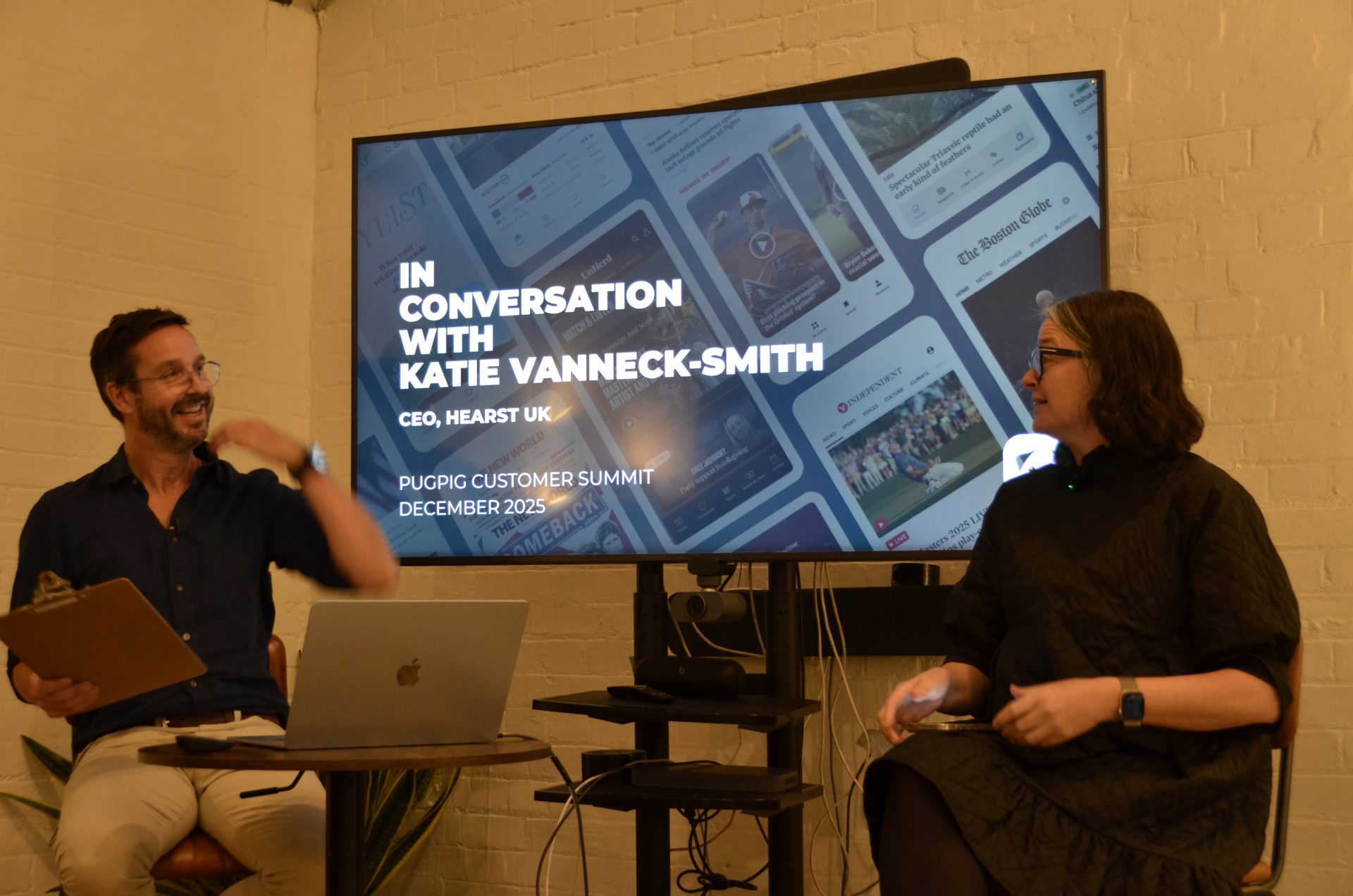
In a candid conversation at our recent Customer Summit, Katie Vanneck-Smith reflected on the thinking that has guided Hearst UK since she became CEO three years ago, and the lessons that have informed how the company has evolved its brands, products and commercial approach.
What emerged was clear – sustainable growth comes from deep brand understanding, genuine audience value and consistency of experience, especially on mobile.
Below are the key insights, in Katie’s own words.
One of the earliest strategic shifts was recognising that Hearst UK’s strength sat in its individual brands, not in the corporate wrapper around them.
As Katie put it, the company moved away from treating everything as “Hearst first” and towards recognising that, “actually the brands are all very different.”
That change in mindset unlocked a more honest strategy. Rather than forcing uniformity, the focus became building distinct ecosystems around each brand, shaped by what audiences already trusted them for.
“We realised we were much more a house of brands rather than a branded house… and that changed how we thought about product, teams and investment.”
A recurring theme in the conversation was the idea of permission – strong brands are allowed to do more.
Hearst UK’s most successful digital products aren’t defined by format, but by the emotional and functional role they play in people’s lives. Katie described how audiences come to lifestyle brands not just for content, but for help, confidence and reassurance.
“If people already trust you, they’ll let you help them in new ways… but you have to earn that every day.”
This trust is what allows brands to extend into apps, paid products and new experiences without feeling opportunistic or out of place.
When it comes to apps, Katie was clear that copying the web rarely works.
Rather than chasing volume, Hearst UK’s app strategy focuses on usefulness: doing a smaller number of things exceptionally well, in ways that fit naturally into users’ routines.
“An app has to earn its place. It has to be genuinely useful, otherwise it just becomes another thing people mean to come back to.”
That emphasis on utility shapes everything from editorial decisions to product design, pushing teams to ask not “how much can we publish?” but “what problem are we solving for someone right now?”
Another standout insight was how Hearst UK thinks about engagement. Growth doesn’t come from spikes, but from predictable, repeat value.
Katie spoke about designing experiences that feel reliable rather than noisy, encouraging audiences to return because the product fits easily into their day.
“Habit isn’t about intensity. It’s about showing up in a way people can rely on.”
In app terms, that means clear structure, familiar patterns and confidence that opening the app will be worth the time.
Importantly, monetisation wasn’t discussed as a separate layer. Paid products work best, Katie argued, when they are a natural extension of value already delivered.
“If you’re genuinely helping people, charging for that doesn’t feel controversial. It feels fair.”
This perspective reframes revenue as an outcome of trust and usefulness rather than pressure or scarcity, leading to healthier long-term relationships with audiences.
Finally, Katie highlighted the importance of internal alignment. Clear thinking about who each product is for, what success looks like and which metrics matter enables teams to move faster and make better decisions.
“Simplicity helps teams focus on what actually makes a difference.”
That clarity, she noted, is what allows experimentation without losing strategic direction.
The conversation reinforced the notion that apps are long-term brand assets. When they are rooted in brand truth, designed around real audience needs and built to support habit, they become one of the strongest ways publishers can turn attention into loyalty, and loyalty into sustainable revenue.
News

News
News
News

News