
Newsletter
Newsletter
A shift from scale to depth, powered by apps, memberships and better user experiences, is defining the next chapter for news publishers.
11th December 2025
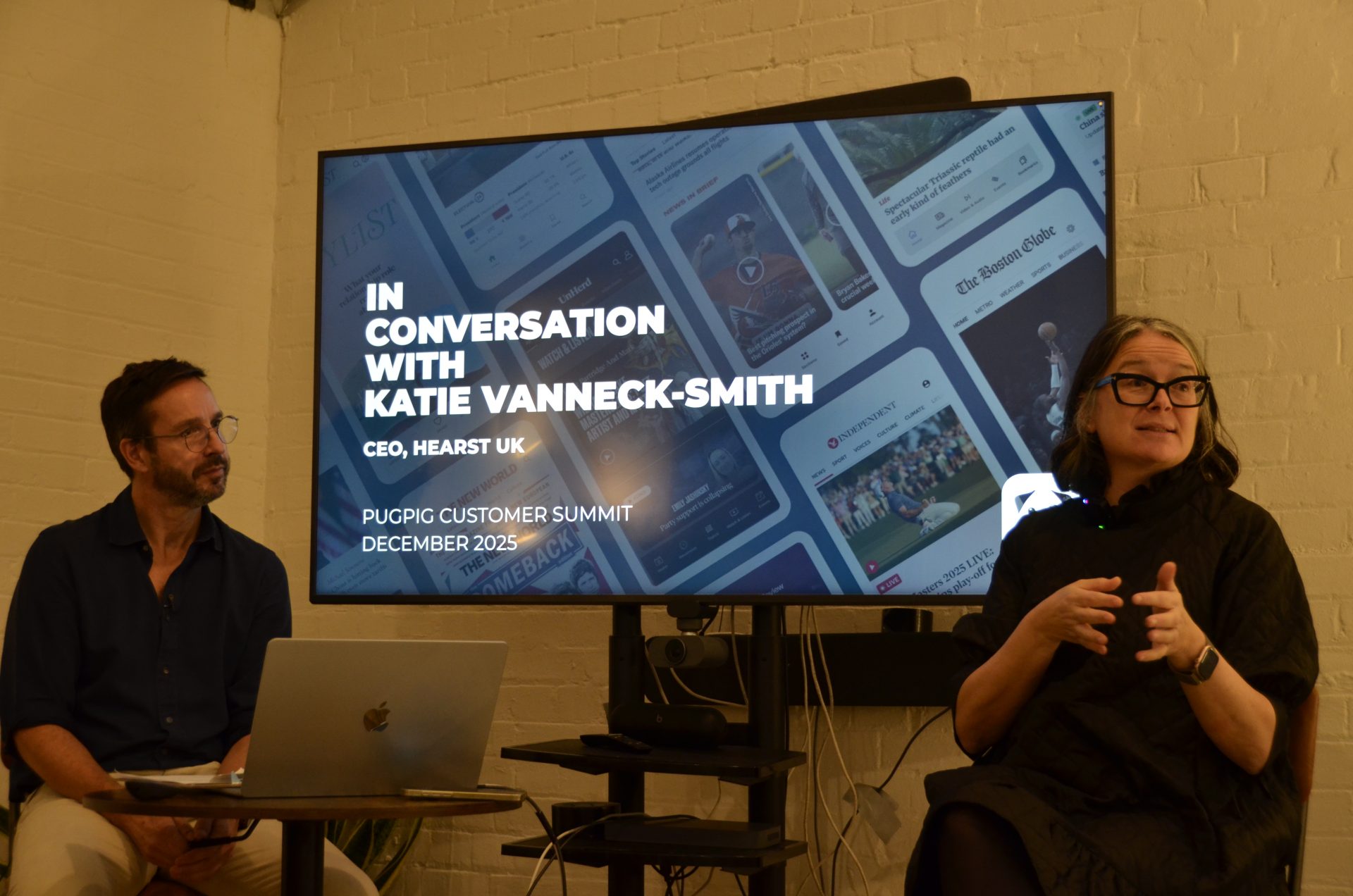
Last Thursday, we welcomed Pugpig customers and partners to our London HQ for our annual customer summit, with a programme focused on the biggest forces reshaping publishing today. It explored how publishers can keep reaching and engaging audiences in the age of AI, how to design news products that deliver distinctive, time-saving experiences and how to navigate the broader technological and societal impact of AI. We also shared an overview of the Pugpig product roadmap and the key areas of innovation planned for the year ahead.
It was a fascinating afternoon of discussion and in today’s Pugpig Media Bulletin we’ll unpack the main themes from the summit and highlight the strategies emerging for building direct, sustainable audience relationships in a rapidly evolving landscape.
Google traffic to news publishers is in clear structural decline. AI & platforms consultant, David Buttle, set out the evidence when he pointed to organic Google referrals falling 7.1% quarter-on-quarter in early 2025, a trend he expects to accelerate. Simultaneously, AI services such as ChatGPT are racing towards 1 billion weekly active users, while Google’s own AI Overviews are driving a sharp rise in “zero-click” queries that never reach publisher sites.
Crucially, David argued that this is only the opening phase of disruption. He views AI Overviews as an interim measure, a stopgap designed to slow the shift of user attention to external AI platforms rather than a settled end state. Drawing on his research into search disruption, he described an emerging, tiered landscape in which different AI-driven products jostle for position. The implication is that publishers cannot afford to wait for the dust to settle. The ground is shifting beneath them now.
To illustrate the scale of the challenge, David cited a Pew Research study that indicated roughly a 50% fall in search clicks, alongside Ahrefs data showing that clicks on the first organic result have dropped by around 35%. Traditional search now sees a zero-click rate of 34%, but in Google’s AI Mode, that figure leaps to 93%. Third-party traffic is no longer a reliable foundation for growth for publishers.
As organic search weakens, some publishers have looked to Google Discover to fill the gap. Chartbeat data suggests Discover now delivers 68% of all Google referral traffic to publishers. On the surface, this looks like a reprieve, but David cautioned against mistaking volume for value. Discover operates as a feed algorithm that rewards sensational or fleeting content, favouring what captures attention in the moment over journalism that builds habit and loyalty. Publishers optimising heavily for Discover risk chasing an audience with little intent to subscribe or return. The danger is that reliance on Discover becomes a distraction from the core task of building direct, owned relationships with audiences where publishers control the experience and own the data.
David outlined a four-part strategy for publishers responding to search disruption. First, teams must aggressively diversify their audience acquisition, shifting focus toward owned-and-operated products designed to build habit and long-term loyalty. Second, he urged a pivot to “AI-resilient” material that is unique, voice-driven, or deeply analytical, making it difficult for machines to adequately summarise or replace.
Third, Buttle called for collective action on intellectual property, noting that measures to protect IP are far more effective when publishers coordinate rather than acting in isolation. Finally, he emphasised the critical need for a robust licensing strategy, advising publishers to develop clear frameworks for deals, as licensing is set to become an important component of the future revenue mix for the entire industry.
James Martin, Executive Director at The Independent, delivered the second session, unveiling Bulletin, a product that embodies precisely what David advocated. Rather than simply adapt their website into a shorter form, The Independent built a standalone product with its own brand identity, designed to deliver speed, credibility and a sense of completion.
Bulletin is designed to distill trusted journalism into concise, bite-sized bulletins which enables rapid consumption on the go. Key features include user-driven personalisation, allowing readers to follow specific topics and writers and an audio component where users can listen to curated feeds.
The lesson from James’ talk was that innovation doesn’t always mean more. Sometimes it means better fit. By respecting the user’s context and time and by building a product that fits seamlessly into their daily routine, The Independent is pursuing a direct, owned and operated relationship with audiences that doesn’t depend on Google’s whims.
Jon Marks, Pugpig co-founder and CTO, expanded on this theme by setting out the broader technological landscape publishers now face. He characterised AI as “relentless” but increasingly normalised as teams move from fearing it to embedding it in everyday workflows.
In this environment, apps can no longer be a token presence or a bolt-on to print. They must be managed as a primary, high-performing channel. Jon stressed that operational excellence tightening processes, releasing faster and using data to guide decisions is essential if publishers and platforms are to keep pace with the industry’s rapid evolution. He outlined Pugpig’s evolving role as a specialist product company with deep integrations into dozens of other platforms such as paywalls, analytics, audio and advertising.
In the day’s closing session, Katie Vanneck-Smith, CEO of Hearst UK, shared a refreshing perspective on managing a diverse portfolio of brands through disruption. Her diagnosis was that the traditional “moat” of retail distribution is gone and scale alone is no longer the protector it once was. The future belongs to publishers who build deep, high-value relationships with smaller, intensely loyal audiences.
“I’d rather have 500,000 women who really care than 5 million casual visitors,” Katie said. This belief has led to a fundamental restructuring of the business. Hearst moved away from a “Hearst first” operational model towards a “brand first” strategy. This shift involved restructuring the business into a system where marketers now have more influence over the portfolios and the P&L, supported by centres of excellence for data and audience. The goal is to empower iconic brands like Good Housekeeping, Harper’s Bazaar and Women’s Health to operate with greater autonomy and focus on their specific communities.
Central to this transformation has been a pivot from chasing broad digital scale to cultivating deep, habit-forming engagement. Hearst UK has pushed into membership models, where apps, podcasts and live events serve as the primary vehicles for building direct relationships with readers. In an era of AI and changing search behaviours, Katie argued, these direct, human-centric connections are the most defensible and sustainable path forward for media.
The summit converged with a clear takeaway that publishers must cultivate direct, owned relationships with their audiences. Pugpig CEO, Jonny Kaldor, underscored that the company is focused on powering exceptional apps for the world’s leading media brands to help them do just this. In his session, Jon Marks positioned Pugpig within this shifting landscape as both a specialist product company and connective tissue in a wider ecosystem. With deep integrations into paywalls, analytics, audio, advertising, and more, Pugpig’s job is to help publishers build the best possible apps while solving the operational challenges that come with change at pace.
Emillie Ruston, Product Director at Pugpig, outlined how Pugpig’s product is designed to map directly to the summit’s core theme of helping publishers build direct, habit-forming relationships. This is supported by three core pillars: making apps unmissable, turning attention into revenue and opening up the platform to publishers.
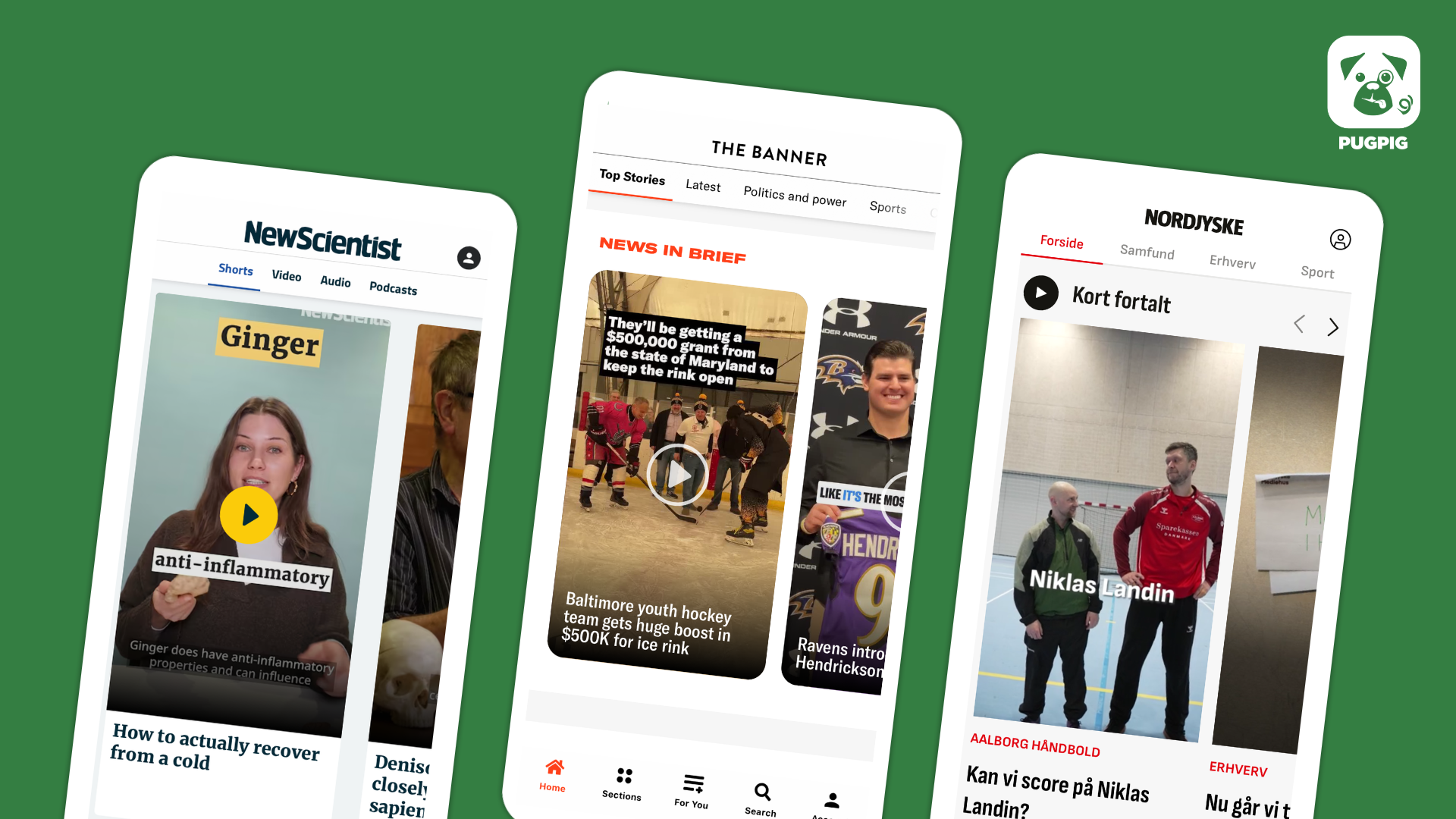
On the first pillar, Emillie highlighted the newly launched personalisation feature, “Follow”, which allows users to curate their own timelines by following specific authors and topics. She also introduced a forthcoming TikTok-style vertical video tab designed to capture attention and significant audio enhancements including support for ad insertion and integration with Apple Connected Podcasts.
On the commercial side, Emillie outlined new tools designed to turn engaged audiences into revenue, such as dynamic paywalls, multi-stage metering and a robust experimentation framework that allows publishers to A/B test layouts and copy without needing app updates. She also emphasised a strategic shift toward extensibility, giving publishers greater ability to build custom features on top of Pugpig’s Bolt infrastructure ensuring that apps remain distinctive and closely aligned with each brand’s unique value proposition.
Looking ahead, Emillie teased an upcoming roadmap that includes potential support for Apple CarPlay and on-device AI for privacy-centric personalisation innovations that will deepen the user experience while respecting reader privacy. She closed by inviting the audience to vote on future priorities via a live interactive poll, reinforcing Pugpig’s commitment to being truly customer-led.
Across the sessions, industry leaders articulated a clear strategy. David Buttle outlined the problem when he said that search is structurally declining, and reliance on Google is no longer viable. The Independent and Hearst UK demonstrated the solution: build distinctive, owned-and-operated products that respect users’ time and intelligence and invest in direct relationships that convert into loyal, paying audiences. Both Jon Marks and Jonny Kaldor from Pugpig emphasised the technological imperative that apps must become primary channels, not afterthoughts.
Here are some of the most important headlines about the business of news and publishing as well as strategies and tactics in product management, analytics and audience engagement.
Newsletter

Newsletter
Newsletter

Newsletter

Newsletter