
News
News
As more publishers experiment with vertical video inside their apps, early data is starting to emerge. We look at customer insights, real usage patterns and industry trends to understand where vertical video is adding value, and how publishers should think about rolling it out.
18th December 2025
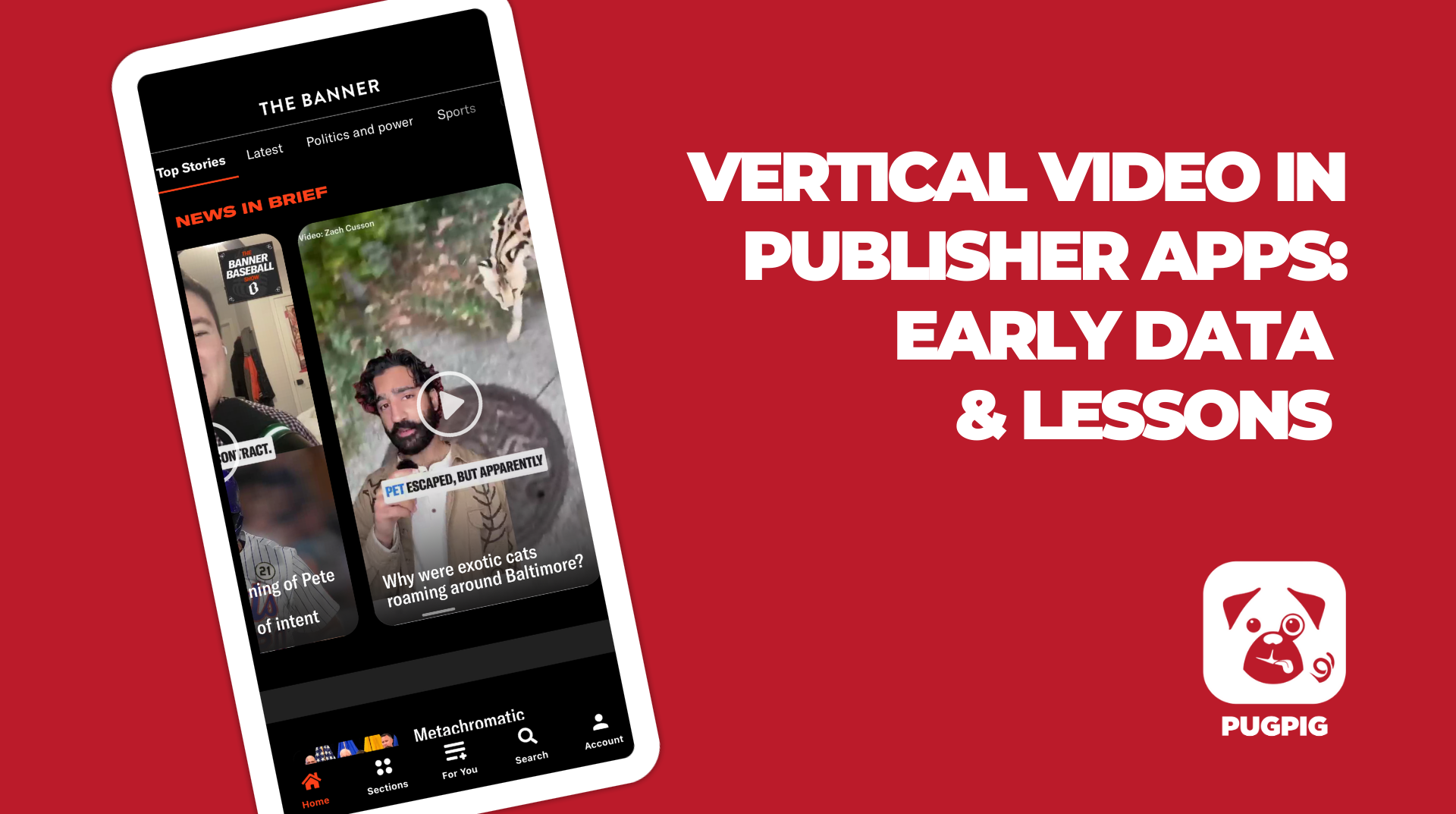
Vertical video has become one of the most popular ways people consume short-form content on mobile. Alongside our ongoing work in Bolt, our mobile app platform, we’ve been looking closely at early usage data, customer feedback and wider industry signals to understand where vertical video adds genuine value, and where expectations need to stay grounded.
We’re seeing that current demand for vertical video is being driven primarily by publishers with existing short-form social video output.
For those teams, bringing that content into the app is a natural extension rather than a new initiative. It offers a way to reuse existing video, modernise the app experience and introduce another habit-building format alongside articles, audio and games.
Where publishers aren’t already creating vertical video, the picture is different. Producing consistent, high-quality video is resource-intensive and it’s not something we recommend forcing without known appetite.
That said, some publishers are starting to explore tools that can generate short-form vertical video from existing assets, such as photo galleries, which can lower the barrier to entry. In all cases, the starting point should be data – how is existing video performing today and is there clear audience demand to build on?
Vertical video usage inside publisher apps is still emerging, but the early signals are encouraging.
Looking at early data from one Pugpig publisher using vertical video in their app:
This tells us that vertical video can reach a larger share of your app audience than traditional in-app video, and it’s more likely to be watched through to the end. One likely reason is that vertical clips tend to be shorter and designed for quick, mobile-first viewing, making full completion more likely.
It’s not just social platforms driving this shift. More publishers are experimenting with vertical video inside their apps to reach younger audiences and build habit over time.
These early signals also line up with wider industry trends. According to the Reuters Institute Digital News Report, 66% of audiences now watch short-form video for news each week, with mobile-first formats playing an increasingly central role.
Publishers like the BBC and The Banner have responded by introducing vertical video directly into their apps, rather than leaving that engagement solely on social platforms. At the BBC, vertical video drove a 30% increase in people accessing video in-app within a year, alongside a 20% uplift in videos viewed.
According to Eric Ulken, VP of Product at The Banner, “Engagement numbers are going up every month. People are starting to build habits around video in the app.”
If you’re exploring ways to drive habit and retention in your app, like adding video, audio or games, check out our Media App Report. It’s packed with data and benchmarks on what’s working across these formats – well worth a read.
Customer conversations also surface some understandable hesitation. The most common concerns we hear are:
These are all valid. Vertical video isn’t about competing with TikTok or Reels on volume. In publisher apps, it works best as a complementary format, something users discover organically and return to as part of a broader content mix.
Our advice is to start small, reuse content that already performs well elsewhere and let audience behaviour guide the next steps.
Vertical video won’t be right for every publisher, and it doesn’t need to be. But for teams already investing in short-form video, bringing that engagement into your own app can make it part of a richer, more habitual experience.
As more publishers experiment with vertical video in their apps, we’ll continue to share what we’re seeing – what’s working, what isn’t and how this format fits alongside the other tools publishers use to build loyalty and long-term engagement.
Want to explore what vertical video could look like in your app? Get in touch and we’ll talk through the best approach for your content and audience. If you’re already a customer, reach out to your customer success manager to discuss rollout options and best practices.
News

News

News

News