
News
News
Our 2026 roadmap sets out how Bolt, our mobile app platform, is evolving across personalisation, audio, video, monetisation and experimentation, with a clear focus on habit, flexibility and long-term control for publishers.
6th January 2026
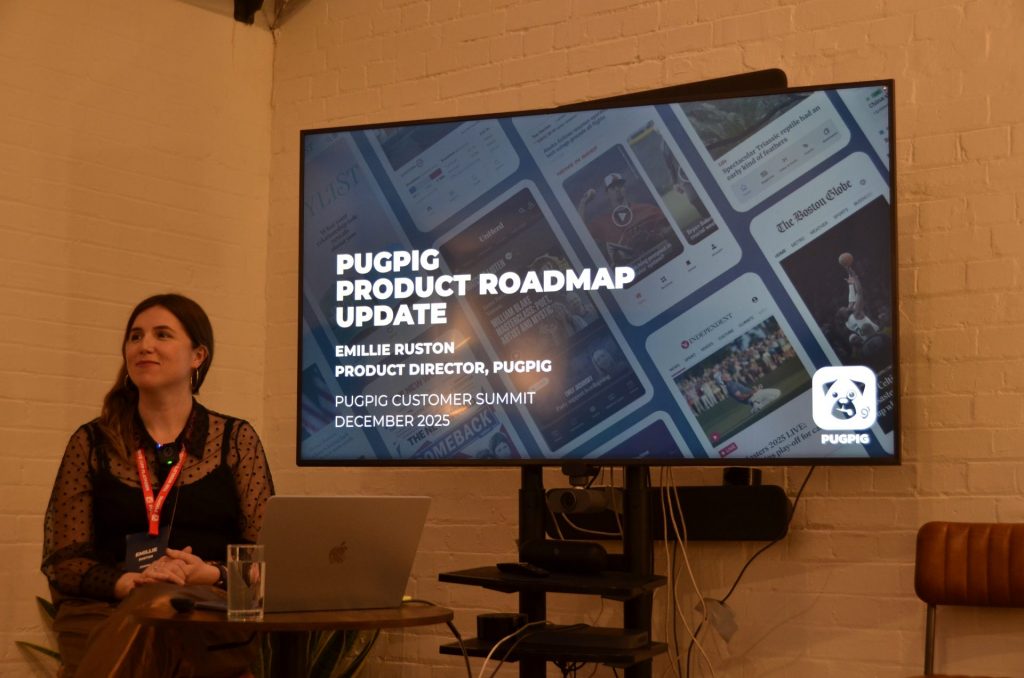
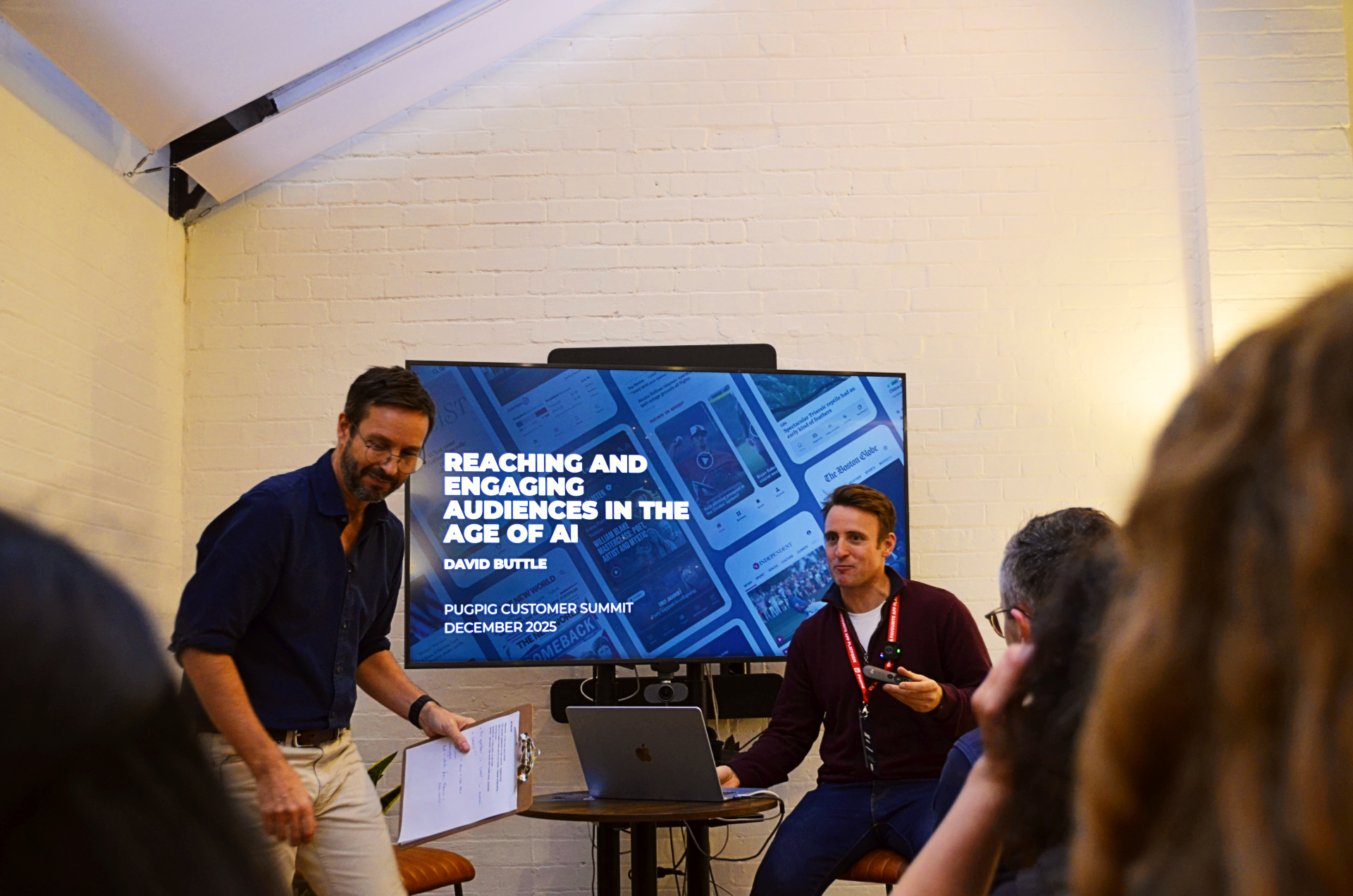
At the Pugpig Customer Summit, Product Director Emillie Ruston shared how our mobile app platform, Bolt, is evolving – and the thinking behind the product decisions shaping what comes next. The roadmap is anchored around three clear priorities: making apps unmissable, turning attention into revenue, and opening up the platform in a way that sets publishers up for the long term.
Across the session, a consistent theme emerged: habit, flexibility and control – as practical levers publishers can use to build stronger relationships with their readers and as a lens for how different parts of the platform are designed to work together.
A major area of focus is Follow – our approach to user-driven personalisation. Now available to all customers, Follow allows users to follow authors, topics or other taxonomies with a dedicated ‘For You’ timeline that brings together saved and followed stories in one place. Readers can also listen to followed content via a single audio playlist, seamlessly combining written and spoken formats.
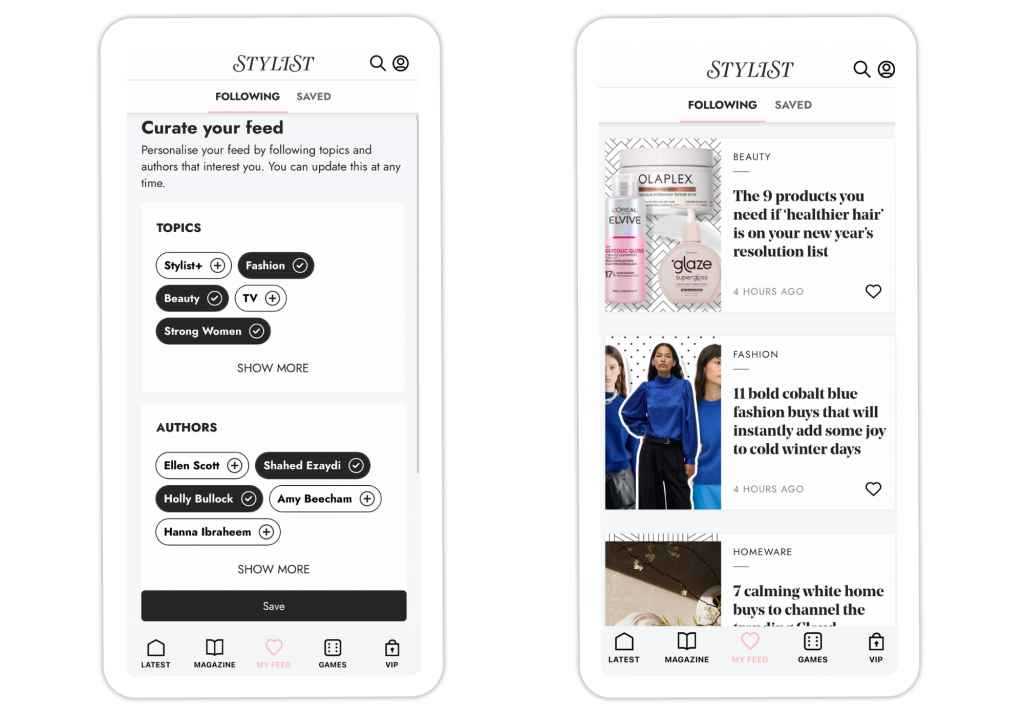
The 2026 roadmap builds on this foundation. Planned updates include stronger onboarding to encourage users to follow topics early, the ability to follow directly from articles and search, and notification preferences that align with what readers actually choose to follow. Further ahead, Follow will incorporate passive signals, API-driven timelines, and features such as “here’s what you missed” recaps and AI-powered summaries.
The goal is to move beyond static homepages, giving readers more control over their experience while supporting stronger habit formation over time.
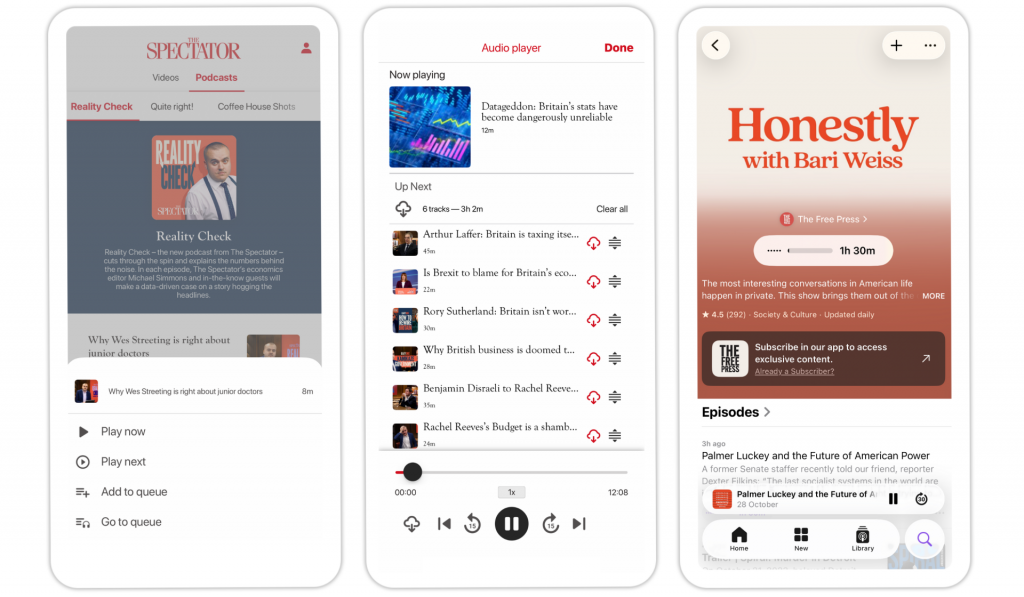
Audio continues to play a growing role in how users engage with apps. 2025 brought a number of updates, including our BeyondWords integration, dynamic audio playlists, Apple Connected Podcasts support and a refreshed audio interface.
Next, support for HLS streams will unlock dynamic audio ads and intros, alongside live audio and radio-style use cases. Audio summaries are also on the roadmap, helping users catch up quickly when time is short.
Together, these updates are designed to drive longer sessions, repeat usage and new monetisation opportunities while keeping audio closely integrated with the wider reading experience.
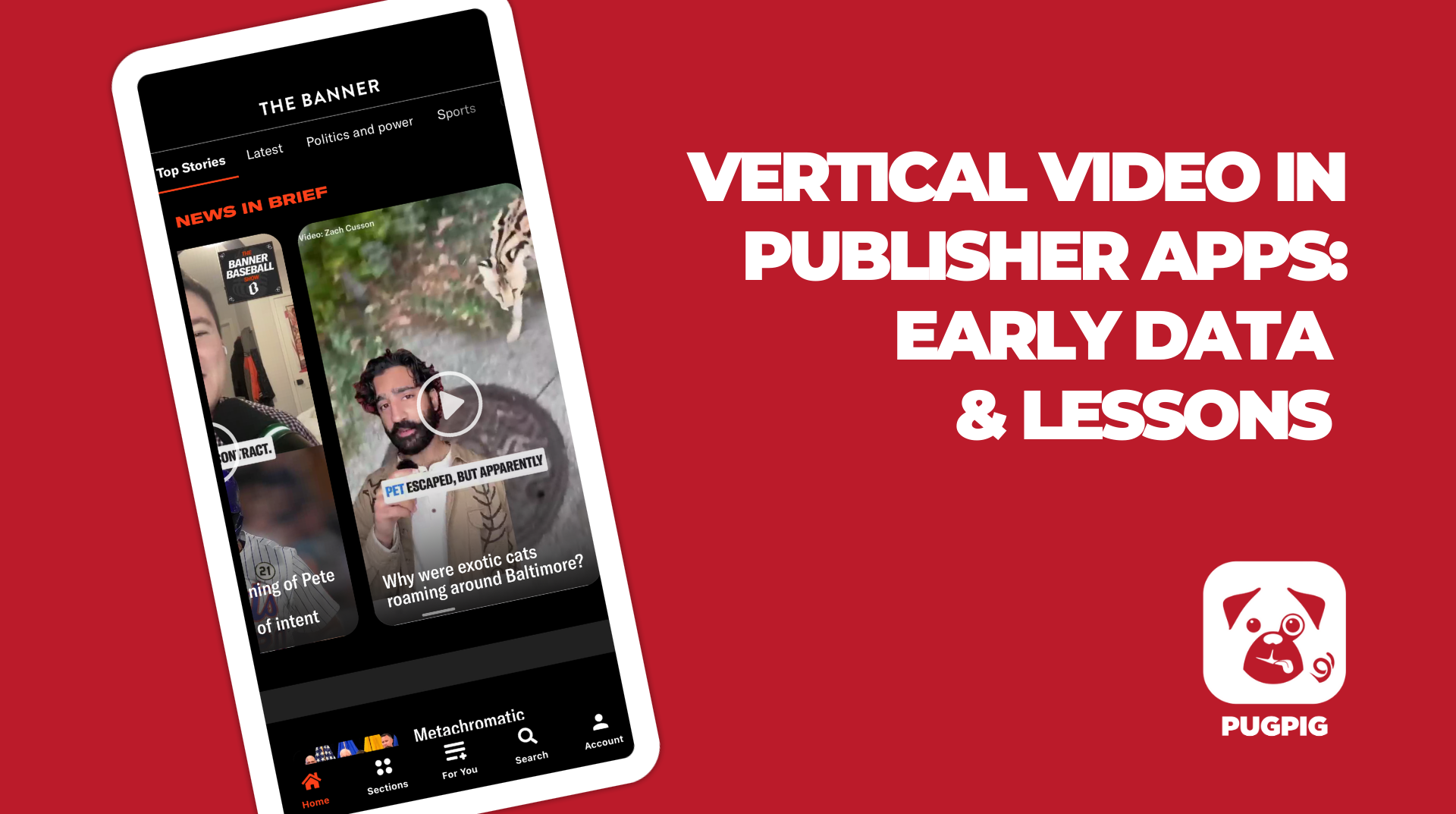
Video has already seen incremental improvements across Bolt, including early support for vertical video. The next phase is about making video more intentional – and more visible – within the app experience.
Upcoming work in 2026 includes a dedicated vertical video tab, a fullscreen swipe-based viewer, support for between-swipe ads, and deeper linking between video and related articles. Additional engagement tools are also planned.
The aim is to give our publishers the space to experiment with short-form and vertical video formats inside their own apps, rather than relying solely on third-party platforms for reach and discovery.
Read more about vertical video in Bolt or see the early learnings and customer insights so far.
A strong product experience is often about the small things. Our 2026 roadmap includes a set of usability improvements designed to help users understand what they can do – without interrupting reading.
Toasts now provide brief, unobtrusive confirmation when users take actions such as saving or queuing stories, with optional next steps. Tooltips are being introduced to surface key features at relevant moments, whether during onboarding or when new functionality is introduced.
These elements are intentionally lightweight, helping users discover value while keeping the interface calm and focused.
Our recirculation module (the ‘read more’ module) has expanded significantly. Publishers can now place modules throughout articles, not just at the end, and have more control over what’s surfaced, whether that’s content from the same section, the same author or the latest stories.
For enterprise customers, we have extended this further with API-driven recirculation, enabling editorial picks, popular content or user-specific recommendations – and creating a pathway for AI-powered suggestions.
The focus here is to make better use of each session by improving discovery and session depth.
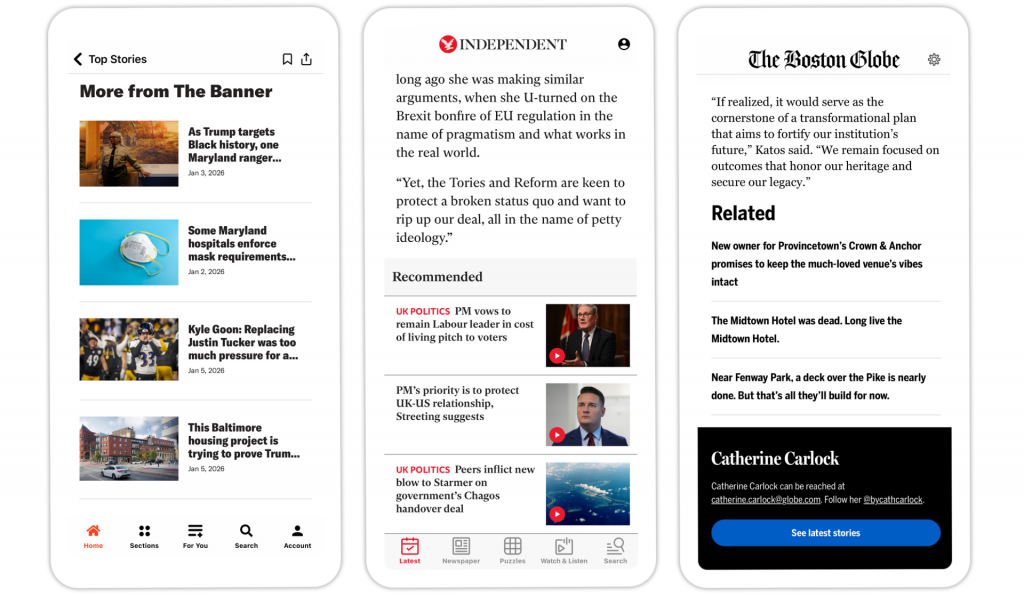
Bolt continues to evolve in line with the platforms it runs on. On iOS, this includes work towards supporting Apple’s Liquid Glass design language, giving content more space to shine. On Android, deeper adoption of Material 3 Expressive will align apps with the latest design standards.
We’re also giving renewed attention to the web app, with a refreshed, more modern design, stronger feature parity with the native platforms, and simpler, more flexible configuration.
Helping publishers convert readers into subscribers remains a core focus. Our subscription screen has been rebuilt from the ground up, and external linking is now supported for US publishers, allowing subscriptions to be completed off-platform.
Next on the roadmap are dynamic paywalls, where publishers can use their own decision engines to grant or deny access, and a multi-stage metered paywall. These updates are designed to give teams more control over how subscription journeys evolve, plus more room to test and refine over time.
Advertising capabilities in Bolt continue to mature, with support for header bidding and GAM-served interstitials. Diagnostics have also improved through the Ad Showcase, helping teams understand why ads may not be serving and resolve issues more quickly.
As this area continues to develop, we’ll be working closely with customers to better understand their advertising strategies and priorities.
Experimentation is a major upcoming investment. Built-in A/B testing will allow publishers to test layouts, configurations, copy and themes without app updates. Experiments can be managed centrally, measured via Pugpig Advanced Insights and Mixpanel, and winning variants rolled out instantly.
The goal here is to remove guesswork and make continuous experimentation a normal part of optimising app performance.
The final part of Emillie’s roadmap session focused on opening up Bolt in a structured, deliberate way. This includes more self-serve configuration and greater control for product and engineering teams, while maintaining a stable, reliable core experience.
Alongside this, we’re exploring future distribution opportunities – from on-device AI within Apple’s ecosystem, to native entry points like Siri and Spotlight, and early thinking around LLM-powered environments.
Our 2026 roadmap reflects a clear direction: deeper engagement through personalisation and format innovation, smarter monetisation through experimentation and flexibility, and a platform that’s open enough to grow with whatever comes next.
As ever, our focus is on building tools that help publishers build habit and keep their apps at the centre of their audience relationships.
During Emillie’s session, we invited customer attendees to have their say on our roadmap with a short interactive prioritisation session. Here are the results…
We asked: Rank our 2026 product focuses in order of importance to your business
The results, in order:
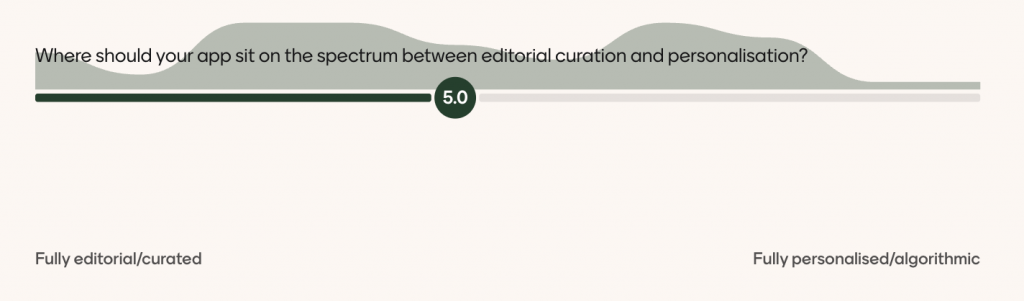
We asked: Where should your app sit on the spectrum between editorial curation and personalisation?
The results: Slap bang in the middle!
We asked: Personalisation should primarily be used to:
The results, in order:
We asked: Is video a significant revenue driver for your business?
News
News
News

News