

Newsletter
Newsletter
As open-web ad supply comes under pressure, publishers are looking to apps to build higher-quality advertising products around engaged audiences, stronger signals and more valuable formats.
6th August 2026
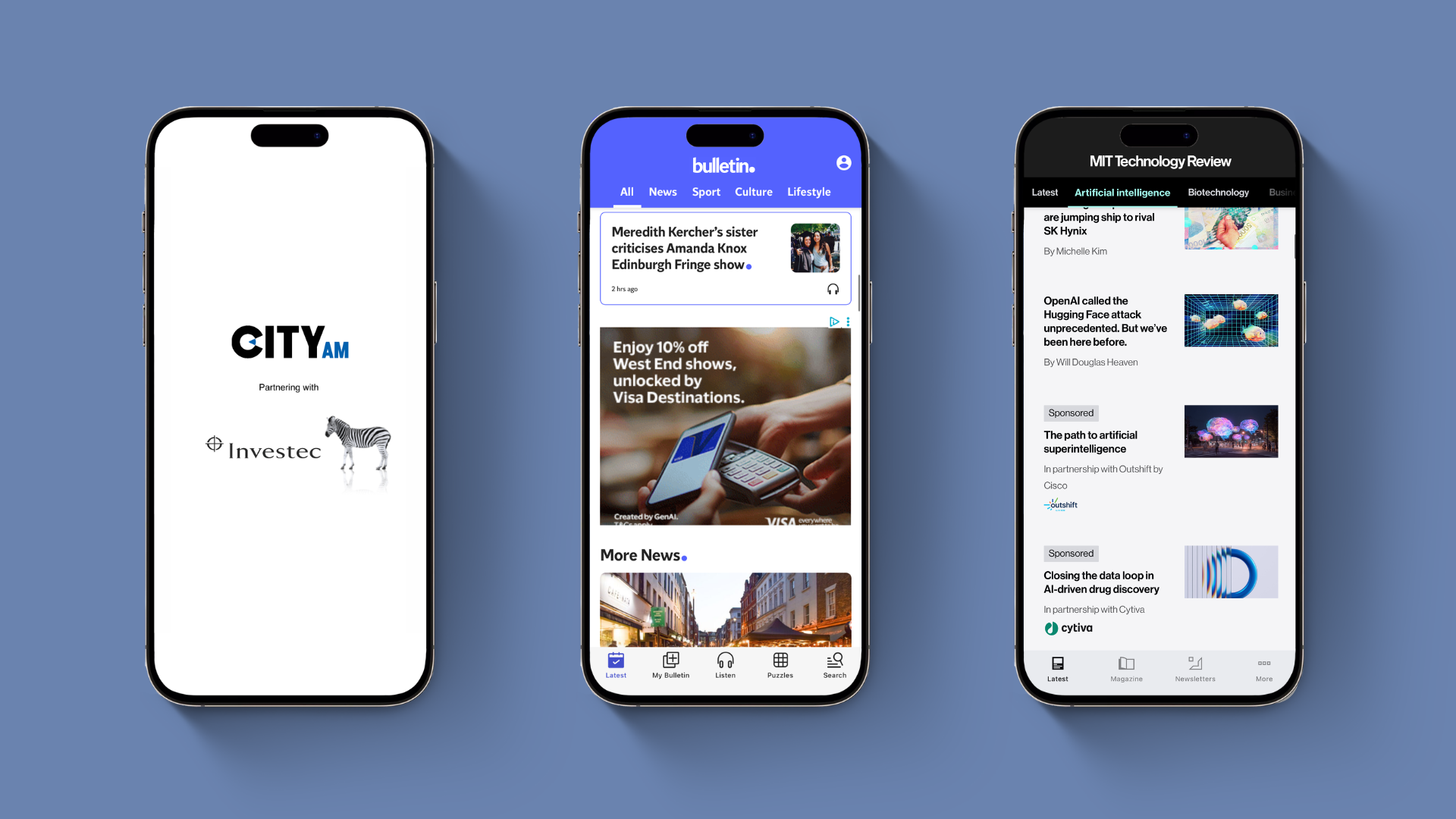
With the open-web advertising model under pressure, publishers are rethinking where quality inventory and engaged audiences can be built. Apps are increasingly part of that answer, offering deeper relationships, stronger first-party signals and more control over the user experience. But building a valuable app advertising business is not simply a matter of shrinking the web stack onto a smaller screen. It means combining the right technology, video formats and commercial controls in a product designed for mobile.
This bulletin explores what that means in practice, and how publishers can build app platforms that deliver both a better user experience and a stronger advertising business.
In July, Digiday shared Ozone’s benchmarking showing that publisher ad request volumes across the open web had fallen by 40% in both the UK and the US, largely because AI-driven, zero-click search is keeping more users in answer engine results rather than sending them through to publishers’ sites.
At the same time, Ozone noted a trend where eCPMs on the remaining inventory have risen, as scarcity and premium environments continue to attract demand. But stronger pricing on a smaller pool of impressions does not address the core issue for publishers. When pageviews decline, ad calls decline with them and that ultimately puts pressure on total advertising revenue.
INMA’s Advertising Initiative has been tracking similar signals. In an article published a couple of weeks ago, Gabriel Dorosz argues that, over the longer term, the market is finally beginning to value, define and price quality itself. His point is that advertising is moving away from cheap, high-volume impressions and towards quality media environments that can demonstrate attention, trust and business impact.
This suggests that publishers now have the opportunity to build better ad products around engaged audiences and premium content rather than reach. In other words, media brands that can demonstrate the quality, rather than scale, of their audience will benefit. That also implies publishers may be leaving money on the table when they devalue advertising or remove it from their most loyal, most commercially valuable users.
As we showed in our 2026 Media App Report, apps are increasingly where deeper audience relationships play out. Compared with the web, app sessions are typically longer and usage is more frequent. They are also controlled environments and tend to closely reflect a publisher’s core audience, with the top-performing app in our cohort reaching more than 90% of that publisher’s total subscriber base each month.
That helps explain why apps are drawing more attention as an advertising channel. For many publishers we speak to, the appeal lies in the ability to build a higher-quality advertising product around known audiences, stronger consent signals and formats that can be managed more deliberately.
To do that, publishers need the app ad stack to operate on a more mature footing than it has historically. That means consent and measurement frameworks that reflect evolving privacy requirements, richer targeting signals that allow inventory to be packaged more intelligently, and delivery controls that make it possible to manage frequency and placement without undermining the user experience. Over the past year, that is one of the areas we have focused on at Pugpig by improving consent support across iOS and Android, extending CMP options, adding PPID and custom key-values for GAM and introducing more configurable controls around refresh, placement and frequency.
The broader shift is that app advertising can no longer be treated as a lightweight extension of web display. If publishers want apps to play a larger role in revenue, they need a similar level of control, signal quality and operational confidence that they increasingly expect elsewhere in their advertising stack.
Apps still operate within a narrower advertising technology and partner ecosystem than the web. The web has had longer to develop tools for auctioning, targeting and yield optimisation, but not every web capability translates directly to apps, where consent and privacy often need greater control. At Pugpig, we are working to bring the most valuable of those capabilities into Bolt without compromising the app experience. Header bidding is one area we are close to supporting, while richer targeting based on content metadata is another area we have been developing and will continue to focus on.
While quality signals and first-party data are becoming more important for targeting, format matters too and video is one of the clearest areas of growth. Earlier this year, INMA identified digital video as one of the strongest growth channels, with short-form vertical video emerging as a particularly high-priority format and a likely destination for a growing share of display budgets over the next few years.
Short-form vertical video is also one of the clearest examples of where both attention and advertiser demand are moving. INMA’s Latin American case studies, for example, highlight publishers building profitable, high-margin businesses around native short-form video teams creating for Reels, TikTok and Shorts.
For publishers, they should consider how to build vertical video experiences and monetisable inventory within their own products, rather than relying entirely on third-party platforms. That is part of the thinking behind adding advertising support to Pugpig Clips, so publishers can create ad inventory inside a vertical-video environment they control themselves.
Technology matters, but the real differentiator is whether advertising is built into the product from the outset. Publishers that consider ad delivery, measurement, creative handling and video monetisation at launch are more likely to end up with a cleaner user experience, greater commercial flexibility and fewer costly compromises later.
One model that can work well is to offer both ad-supported and ad-free experiences. That gives publishers a way to serve users who want a cleaner premium product while still retaining meaningful inventory and monetisation opportunities elsewhere.
Apps are also becoming a testing ground for formats and commercial approaches that go beyond simply reproducing the web stack. That creates room for more native mobile experiences, from interstitial-style placements to splash screens and other formats that can feel better suited to the app environment.
The broader shift is from replication to experimentation. The goal is not to squeeze desktop display logic into mobile, but to use the app as a more flexible commercial environment where publishers can test formats, expand vendor options and improve yield in ways that better reflect mobile behaviour.
The whole thrust of our advertising work over the last year, from targeting and consent, to frequency controls, diagnostics and documentation, has been to give publishers the tools they need to treat their apps as full‑fledged advertising platforms. The platforms that will thrive in the current market are those whose teams see advertising as a core part of the product.
Looking across the industry, the narrative is remarkably consistent. The open‑web ad model is structurally weakening due to the decrease in traffic caused by the increasing prominent of AI-search keeping users away from publishers’ sites. The media brands rebuilding successfully are those investing in quality environments, first‑party data, direct‑sold premium inventory, video and vertical formats.
For us at Pugpig, apps are becoming an increasingly important part of a publisher’s high-quality advertising business. The app ecosystem still has fewer advertising technology and partner options than the web, and some web-first capabilities do not translate neatly into a polished, privacy-conscious app experience. But that gap is narrowing.
Here are some of the stories that caught our eye in the world of news and publishing recently.
Newsletter

Newsletter

Newsletter

Newsletter