
Newsletter
Newsletter
From ad-free apps to format bundles and flexible passes, publishers are testing new ways to turn audience needs into paid products.
16th October 2026
Publishers are rethinking not just how much readers should pay, but what they might pay for. For years, much of the discussion around reader revenue has centred on the paywall. How many articles to offer for free, which content to restrict and when to ask readers to subscribe have been the key questions. Those remain important decisions, but they focus on selling the existing subscription rather than asking whether a different product might better suit the audience.
As search and Discover referrals decline, publishers are looking for ways to build stronger relationships with the audiences they retain. For some, this means testing more focused and flexible paid products that could also appeal to people who would not consider a full subscription. SFGATE, The Economist and The Washington Post have each taken a different approach.
In this week’s media bulletin, we look at what their experiments tell us about building paid products around audience needs.
Hearst’s SFGATE launched Friends of SFGATE on the 16th July, the first paid offer in the brand’s history. It costs $4.99 a month with a seven-day trial and it provides ad-free reading in a new app, story bookmarking, interactive maps, curated local guides, audio of the day’s top stories, early access to events and a California mini crossword with streaks and a leaderboard. SFGATE.com itself stays completely free.
SFGATE is facing the same referral pressures as other publishers. Whilst they recorded 18.5 million US visits in July, this was down 29% year on year, and editor-in-chief Grant Marek told Press Gazette that the growth of AI Overviews and answer engines “definitely has had an impact” on this. The title had been heavily dependent on Google Discover, a risk we looked at last year.
What makes SFGATE’s approach interesting is its decision to keep the website free. It is Hearst’s most profitable news title and has the group’s largest base of readers returning at least six times a month. Rather than asking those readers to pay for access, the publisher saw an opportunity to offer them a better experience.
Speaking to Press Gazette, Grant explained: “We’re not telling everyone ‘you have to pay this to read our journalism’. We’re saying ‘if you come a lot and you are annoyed by the ads, we’re giving you an opportunity to get rid of them’.” He added that early app users were reading six stories per visit.
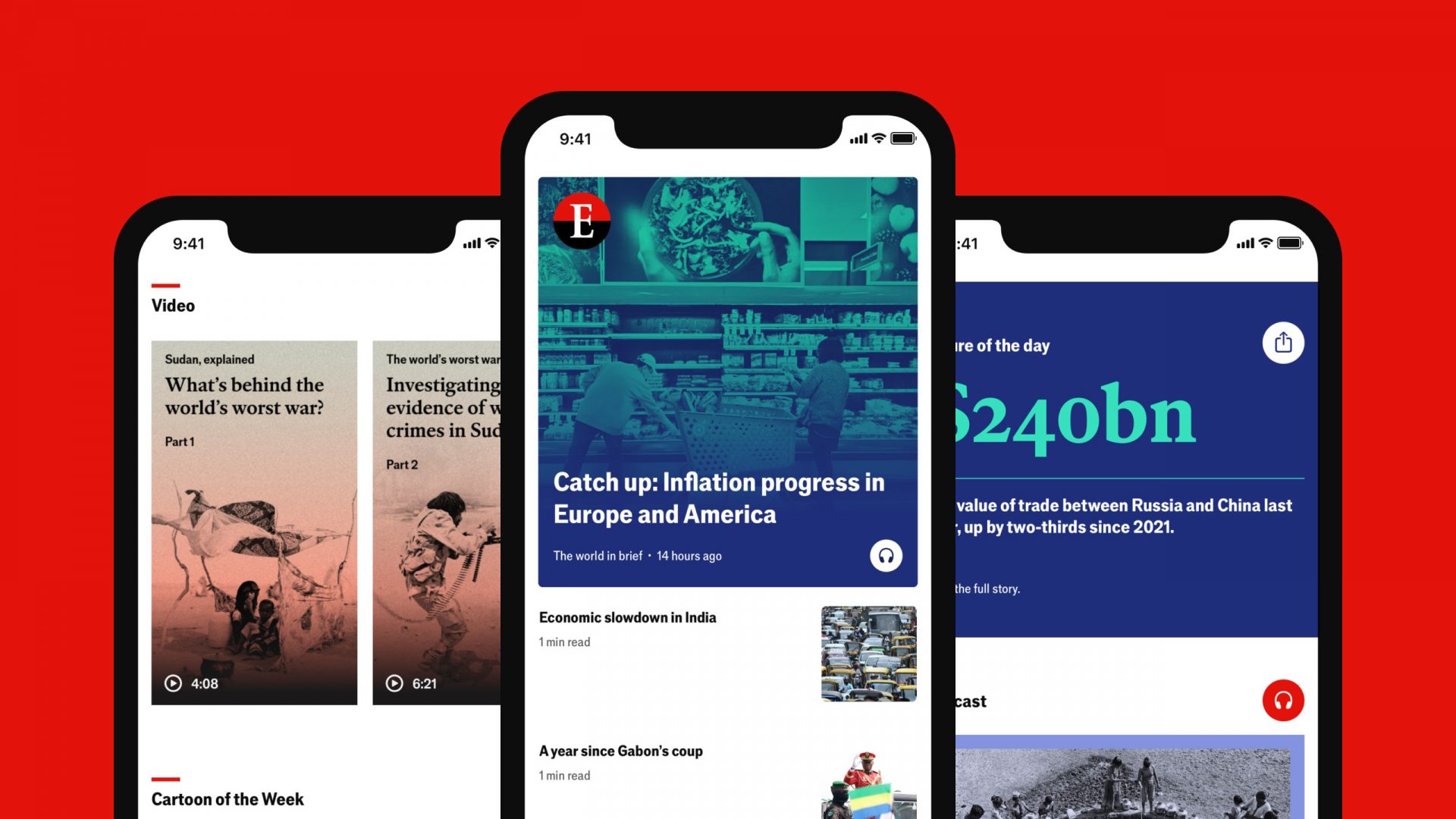
The Economist has taken a different approach. Rather than focusing on limiting access to written journalism, they have packaged a collection of audio, video and other subscriber products into a lower-priced subscription. Launched as a pilot in Canada, Denmark, Norway and Sweden at the start of July, Economist Play bundles long-form video, premium podcasts, daily audio briefings, short-form video, subscriber-only newsletters and games. Its existing Podcasts+ product has been folded into the new tier, which is designed primarily for use in The Economist app, although subscribers can also access it on the website.
The thinking behind Play appears to be that formats already valued by existing subscribers can also attract a new audience. The Economist says 75% of their subscribers have engaged with Insider, its subscriber-only video product, at least once since its October 2025 launch. We looked at its use of vertical video inside owned products in March, and Play tests whether that engagement can support a lower-priced offer for audiences who prefer to watch and listen.
But engagement among existing subscribers does not establish whether those formats will persuade new audiences to pay. Luke Magerko of Mather Economics told Digiday that evidence linking particular formats to subscription acquisition remains limited. Play is a test of that opportunity, rather than proof that it works.
The Washington Post has focused on readers who are willing to pay for journalism but do not want to commit to a subscription. It began testing a week pass in September 2024, comparing prices of $4, $7 and $10 before settling on $7. A day pass followed in spring 2025, with a $2 pay-per-article option introduced later that year.
According to INMA, the early findings suggest there is an audience for this more flexible approach. Among people who had already said they were not open to paying for a news subscription, 43% found a week pass appealing. That interest has also translated into some repeat business with one in ten day-pass customers buying again or subscribing within 180 days, without targeted lifecycle marketing to encourage them.
The pricing also shows how flexible access can sit alongside the main subscription rather than simply compete with it. The $4 day pass is offered alongside a monthly introductory subscription at the same price. Occasional readers can pay without making an ongoing commitment, while those considering a subscription have a clear reason to see it as better value.
There are also differences in the content attracting these customers. Flexible-access buyers tend to arrive through lifestyle, food, culture and service journalism rather than the core news coverage that typically drives subscriptions. This suggests an opportunity to reach a different group of paying readers, although it is not yet proof that the cheaper products will avoid drawing demand away from full subscriptions.
These publishers are changing the offer rather than simply discounting the subscription. A better app experience, an audio and video bundle or shorter periods of access each gives a different audience a reason to pay without committing to the full product.
As we discussed a fortnight ago, a smaller audience with a regular, direct relationship can be worth more than a larger anonymous one. For experience and format-based products, apps can help build that relationship by bringing saved content, audio, video and games together. Across all three models, however, shaping the offer requires product, editorial, audience and subscriptions teams to work together. It is a product and pricing decision, not simply a paywall setting.
Start with how often readers return and what brings them back. SFGATE’s offer builds on a large group visiting six or more times a month, while our strongest-performing Pugpig apps reach 40 sessions per user each month. Look at weekly return rates, consistency and logged-in use to identify audiences who might pay for an improved experience or particular formats. Occasional visitors arriving for one story may be better suited to passes as willingness to pay does not always mean willingness to subscribe.
Then look for specific needs in audience research, customer feedback and behavioural data. Ad-free reading, bookmarking, audio or local guides need to solve an existing frustration or serve an established interest, rather than simply add features to justify a price.
Consider that price alongside the main subscription. The Washington Post’s day pass gives occasional readers another option while making its introductory subscription look better value. A new offer should widen the paying audience without undermining the full product.
The evidence remains limited. Neither SFGATE nor The Economist has published subscriber numbers for its new tier, and engagement with existing products does not prove demand for a new subscription. The Washington Post has shared more substantial findings, but these still come from its own research.
Cannibalisation also needs measuring from the start. Different content preferences among pass buyers are encouraging, but do not establish whether those customers would otherwise have subscribed. Publishers need to track repeat purchases, upgrades and any displacement of full subscriptions, ideally against a comparable group not shown the new offer.
The all-access subscription is likely to remain the core offer, alongside more focused ways for readers to pay. Publishers can start by identifying what their audiences already value, then test whether offering it separately generates additional, sustainable revenue.
Here are some of the stories that caught our eye in the world of news and publishing recently.
Newsletter

Newsletter

Newsletter

Newsletter